1-Chlorohexadecane: Insight, History, and Future Use
Historical Development
Knowledge of alkyl halides has shaped the story of organic chemistry for decades. 1-Chlorohexadecane didn't surface out of nowhere—it grew out of efforts to modify hydrocarbon chains in the lab and make them useful in real life. Early researchers pushed the boundaries of organic synthesis, learning that chlorinating straight-chain alkanes offered more than just a curiosity. The substance caught the attention of industrial chemists looking for ways to tweak surfactants and lubricants back in the mid-20th century, well before today's crowded catalog of specialty chemicals. In labs and factories across Europe and North America, this specific chlorinated hexadecane variant offered a straight path into higher-value derivatives. Long before the flood of modern data sheets and regulatory frameworks, chemists depended on sensory checks, simple boiling points, and careful fractionation to separate 1-chlorohexadecane. Each improvement in chlorination technique or purification method added something new to its use profile. Now, the compound has found its way into a huge range of industrial procedures and specialized manufacturing sectors.
Product Overview
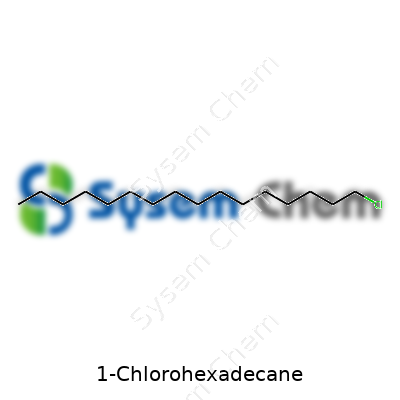
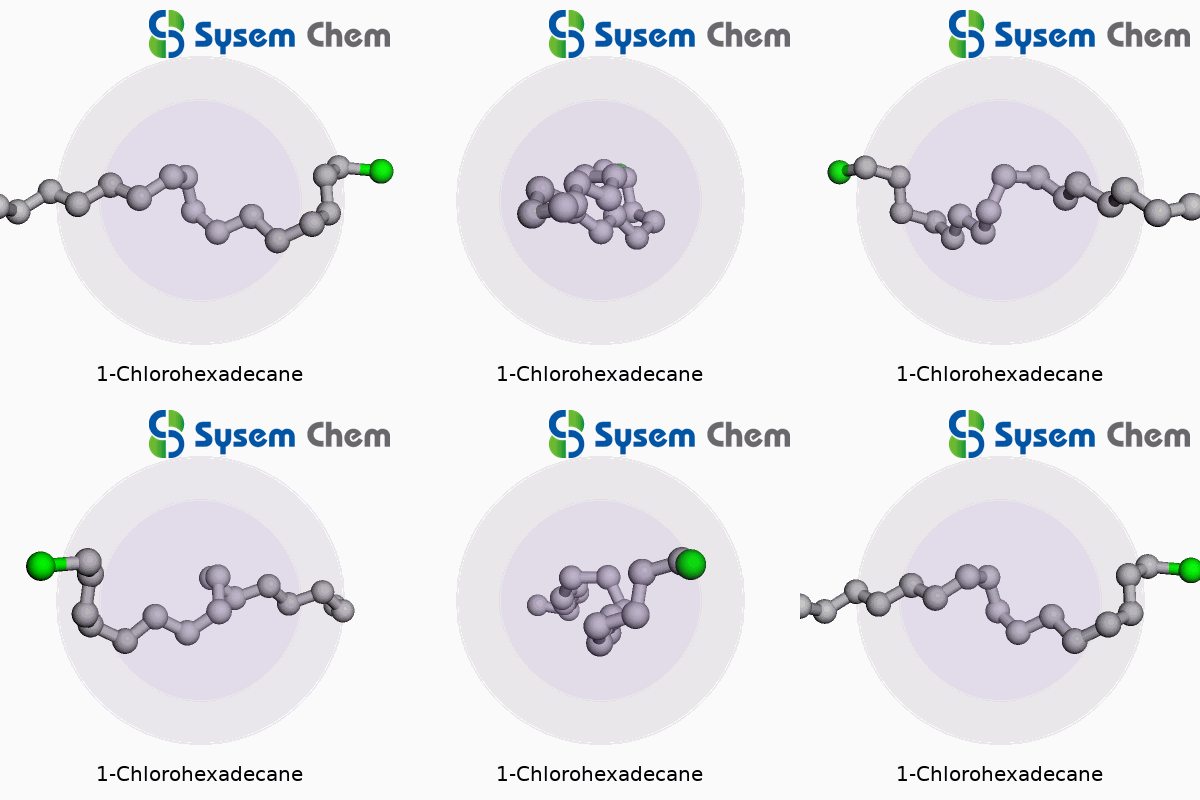
1-Chlorohexadecane, for many, brings a long carbon tail capped with a reactive handle. The chlorinated head on a sixteen-carbon chain creates just enough polarity and reactivity to open the door for downstream transformations. Coconut oil derivatives, paraffin chemistry, and even personal care ingredients sometimes build off this molecule. Molecular formula: C16H33Cl. Structure: a straight, unbranched chain. Sometimes, you will see it listed as cety1 chloride or hexadecyl chloride. A rarely-discussed feature is its role as an intermediate—working quietly in multi-step synthesis rather than as an end-user product for everyday consumers. Lab suppliers sell it in modest bottles, sometimes for graduate-level coursework, or it arrives in drum quantities at blending plants or surfactant manufacturers.
Physical & Chemical Properties
This chemical stands out in the stockroom for its waxy, colorless-to-tan appearance. Its melting point hovers around 18 °C, which means it sits solid or soft at cool room temperature but flows more freely in a heated workspace. Density clocks in near 0.86 g/cm³, and the boiling point exceeds 300 °C. Not exactly something that evaporates away quickly—a bonus for shipping or handling. As a primary alkyl chloride, it tends to moderate reactivity. Water solubility remains extremely low, so it floats freely in organic phases. The scent tends toward the faintly waxy, similar to its paraffin kin. Chemical compatibility shows the typical resistance of long-chain hydrocarbons, with the chlorinated end acting as a gateway for further tweaks but not as a dramatic hazard all by itself. Resist the urge to handle without gloves; chlorinated paraffins may not bite on contact, but repeated exposure can build up unwanted irritation.
Technical Specifications & Labeling
Producers still track technical specs the old way: assay by GC, confirmation of chain length, check for side-chain isomers, spot the degree of chlorination. Purity for research or synthesis often hits above 98%. Some suppliers highlight residual solvent levels, which tells a lot about their isolation steps and dedication to clean processing. Batch records must include certificate of analysis, lot number, and producer details. Any shipping drum or sample vial comes with clear hazard identifications—UN/NA numbers, pictograms (usually the exclamation mark for irritant), and safety phrases. Chemists care about boiling and melting point ranges, as those control the compound’s behavior in process kettles. In my experience, when those numbers drift, so does the product quality in the plant.
Preparation Method
Lab prep doesn’t require rocket science. Commercial production often takes a two-prong approach: direct chlorination of hexadecane using molecular chlorine under controlled UV light or, in smaller-scale settings, reacting cetyl alcohol with thionyl chloride or phosphorus trichloride—sometimes one reagent works better in scale-up, sometimes the other. The choice hangs on available raw materials, by-product management, and waste disposal costs. Direct chlorination creates heat and potentially messy by-products if you don’t keep the system cool and controlled. Alcohol conversion routes demand handling of acidic gases and corrosive reagents, something every pilot plant engineer learns to respect. Finished product, whether by batch or continuous flow, must pass through distillation or washing to strip away the free chlorine, odd short chains, and leftover acid tracers. Solid fraction sometimes needs to be remelted and filtered, especially on cold days when the product turns sludgy in transfer lines.
Chemical Reactions & Modifications
Few things light up a synthetic chemist's mind more than a clean, single-site halide. 1-Chlorohexadecane reacts through well-trodden nucleophilic substitution, turning into amines, ethers, or even sulfides under the right conditions. It's the kind of handle that opens up pathways for surfactant synthesis, ionic liquids, or cationic intermediates. Grignard reactions transform it into higher-order alcohols or acids, though the bulkiness of the chain needs careful matching with reaction solvent and temperature. Ongoing research explores its use as a precursor in quaternary ammonium salt production, making it especially interesting for antimicrobial surface treatments and new phase transfer catalysts. For certain catalytic hydrogenations, select chemists still prefer the chain-length precision offered by this chloride—the devil is always in the details of reactivity and downstream stability.
Synonyms & Product Names
1-Chlorohexadecane wears several names, depending on context and vendor: hexadecyl chloride, cetyl chloride, n-hexadecyl chloride, or even NSC 134099 in older chemical inventories. Specialty surfactant makers add their own trade names, creating added confusion for newcomers. Labeling hiccups span languages and regions, yet a careful check of molecular formula and chain length avoids most mix-ups. Common wisdom amongst buyers: never assume two “cetyl chlorides” are the same without seeing assay and impurity data.
Safety & Operational Standards
You won’t see 1-chlorohexadecane making evening news for acute toxicity. That doesn't mean lab safety takes a back seat. It can irritate skin, especially after repeat contact. Some studies trace weak mutagenicity or organ stress after high-dose exposure in animal models, usually related to the chlorinated head. Standard PPE—nitrile gloves, protective eyewear, and reliable local ventilation—reduces risk, especially when manipulating batches above lab scale. Production lines install vapor detection and forced ventilation not because this compound reliably spills, but because industrial hygiene rules don’t leave room for improvisation. Handling procedures focus on spill control, labeled transfer vessels, and plain-speaking MSDS access at every station. Having watched plant shifts handle similar alkyl chlorides, the best defense comes from regular, non-dramatic training and clear lines of communication between supervisors and operators.
Application Area
1-Chlorohexadecane isn’t a household name, but it props up more end products than most realize. Its longest-lasting role sits in specialty surfactant formulation, adding tailored hydrophobic moieties to cationic or nonionic constructs. Some concrete admixtures, textile softeners, and even antistatic coatings leverage chain-length-specific chlorides to tune performance. Pharmaceutical intermediates occasionally use the backbone for custom-tuned excipients or synthetic steps that need long-chain hydrophobicity. The personal care industry has flirted with its derivatives, mainly in conditioners and emulsifiers. In practice, the reach extends even farther into coatings, synthetic lubricants, and research on biodegradable plastics. Consultants in chemical EHS audit teams often recommend alternatives only if the molecular fit can't be achieved by intermediate chlorinated paraffins, a nod to the compound’s hard-to-replace characteristics in some processes.
Research & Development
Academic and private labs use 1-chlorohexadecane for method development, especially in nucleophilic displacement studies or new surfactant designs. Industry R&D aims toward minimizing by-product formation or finding new uses for chain-long alkyl halides. Custom synthesis outfits will often stock several chain-lengths to match the demands of pharmaceutical or specialty chemical clients. Regulatory and toxicology research picked up pace in the last two decades, mapping out environmental fate and bioaccumulation potential. Analytical chemists build new GC and HPLC methods to separate this and its structural cousins out of complex mixtures. I’ve seen project groups chase subtle modifications in the chain or head group to optimize performance in unrelated sectors—from agriculture to materials sciences.
Toxicity Research
Most toxicology reference books list 1-chlorohexadecane as mildly hazardous by ingestion or inhalation, with much higher concern for skin absorption among animals versus humans. Studies on chronic exposure show low acute toxicity, but lingering concerns about breakdown products and long-term chlorinated paraffin exposure remain. The biggest questions circle around environmental persistence and potential for bioaccumulation in aquatic organisms, drawing increasing regulatory and public scrutiny. Detailed data on reproductive or developmental harm stays elusive—the sort of gap that pushes buyers in health or food sectors to tread carefully. Waste disposal protocols strongly discourage dumping into the drain. Most producers and users stick closely to local and international wastewater and effluent standards.
Future Prospects
Looking forward, the role of 1-chlorohexadecane reflects changes sweeping through all of specialty chemicals. Demand often tracks with the fortunes of surfactants and functional materials that need a robust, long-chain backbone. Some opportunities appear in greener synthesis and biocatalytic conversions. Regulatory tightening—especially pressures on persistent organic pollutants—might someday impact broader use, though chain length and structural specificity may allow continued application in certain niches. Increasingly, chemical engineers tackle the environmental footprint not just of the product, but of every stage in its lifecycle: raw material sourcing, energy used for chlorination, solvent recovery, and even smart packaging. Substitutes sometimes appear on the horizon, but the combination of chemical stability, long chain, and ready availability keeps 1-chlorohexadecane in play for now. Future-focused R&D continues exploring safer modification routes, recyclability, and customized derivatives that fit the changing needs of consumer and industrial markets. Real change in how we use this compound may come not from any single discovery, but from a shift in perspective about the legacy and promise of every chain-length specific chemical in the modern world.
Chemistry’s Quiet Workhorse
Ask anyone who’s spent time in a chemistry lab about specialty chemicals and you’ll hear stories of strange-smelling reagents tucked away in amber bottles. 1-Chlorohexadecane fits that mold: not a chemical found in basic DIY cleaners, but it pulls more weight behind the scenes than most realize. This compound belongs to the family of long-chain alkyl halides, giving it a unique mix of reactivity and stability. If you see a colorless liquid with a faint scent that lingers after the cap is screwed back on, you’re probably looking at 1-Chlorohexadecane.
Building-Block Material
Industries use this chemical mainly as a building block in organic synthesis. In research and industrial labs, scientists are always searching for starting materials that react in predictable ways. That’s where the chlorine atom on its long tail comes in. During custom syntheses, this compound can be swapped into a reaction to introduce a sixteen-carbon backbone. Whether building surfactants, lubricating agents, or tailor-made molecules, this backbone helps create materials with the right mix of durability and functional ends.
Surfactants and the World of Cleaners
The backbone provided by 1-Chlorohexadecane ends up in products that touch everyone’s life, even if the base chemical never makes it to the label. In the world of surfactants—ingredients that let oil and water shake hands—long hydrocarbon chains carry a lot of value. When producers want to give laundry detergents, shampoos, or household sprays just the right behavior, they count on these long chains. Once scientists swap out the chlorine atom with a different group, they create customized surfactants. Each tweak lets the formula lift away dirt, dissolve grease, or bring sparkle back to surfaces.
Textiles and Coatings
Textile developers know the headaches that come with trying to blend softness and water resistance. They need flexible building blocks that play nicely with tough fabrics. The long tail of 1-Chlorohexadecane gets woven, indirectly, into polymers and coatings. By anchoring extra-long hydrocarbon groups onto a backbone, manufacturers can adjust the feel, strength, and water repellency of finished fibers. These qualities help sportswear and technical gear stay comfortable without crumbling under a few trips through the washing machine.
Synthesizing New Molecules
Almost every new medicine or material starts with a library of raw chemicals. A bottle of 1-Chlorohexadecane means a lab is ready to run tests on catalysts, design more effective drug delivery systems, or build self-assembling nanomaterials. Pharmaceutical and materials researchers test dozens of variations, often using simple building blocks like this one, to see which new structures deliver the right physical or biological effects. Institutions that develop better ways to use this compound help drive advances in health and technology, even if the achievements go unnoticed by the public.
Health and Safety Practices
Sticking with good safety checks matters with all alkyl halides. If this chemical gets on your skin or in your lungs, the irritation isn’t worth the risk. Industry guidance and independent watchdogs both agree: gloves, goggles, and proper ventilation take priority. Responsible facilities don’t just handwave this point. Evidence-backed training and regular audits help keep accidents from turning a useful tool into a hazard.
The Path Ahead
There’s a constant push to limit environmental impact and improve safety for chemicals like this one. Initiatives focusing on greener reactions let manufacturers use less energy, cut waste, and move away from toxic byproducts. The next few years will almost certainly see a shift toward sustainable alternatives and more efficient handling, driven by feedback from both workers and surrounding communities.
Digging Into 1-Chlorohexadecane
Anyone who’s mixed motor oil knows that hydrocarbons come in all shapes and sizes. Some of them sneak a chlorine atom into the mix, and that’s what we see in 1-Chlorohexadecane. The chemical formula for 1-Chlorohexadecane is C16H33Cl. This means you get sixteen carbon atoms, thirty-three hydrogens, and a single chlorine atom snugged up at one end. In simple terms, it’s a straight chain of sixteen carbons, and chlorine grabs the first position. That location in the structure changes how it acts, how it reacts, and how you handle it.
Why Structure Matters
Chemists care a lot about structure. Even someone working in an automotive shop knows that little changes in a molecule can give you a grease or a solvent or something toxic. For 1-Chlorohexadecane, swapping the spot where chlorine hangs on changes the game. Chlorine at the number one slot gives the compound certain traits—higher boiling point, for one, plus a tendency to dissolve oily stuff. The long, waxy carbon tail means it won’t wash away in plain water. I learned in the lab that you need gloves when working with these kinds of substances since they pass easily through skin and carry that chlorine atom along with them.
Industrial Uses & Risks
No one picks 1-Chlorohexadecane on accident. Folks use it in research, cleaners, and as an intermediate when building more complex compounds. In the chemical industry, these straight-chain chloroalkanes show up as starting points to make surfactants—basically the stuff in detergents that helps wash oil off engine parts or greasy pans. Some companies give it a job as a solvent or use it in lab tests. Simple in structure, sure, but it fits a slot that nothing else quite fills.
At the same time, putting chlorine and a long carbon chain together raises eyebrows. I’ve read enough about environmental persistence to know chlorine compounds stick around in soil and water. That’s a red flag. Workers who don’t protect themselves risk skin and eye irritation. Over time, these sorts of compounds tend to build up in living creatures, leading to restrictions and careful regulation worldwide. Once I visited a recycling plant where folks took real care to track waste streams containing organochlorine chemicals—nobody wanted any surprises showing up in local rivers later on.
Balancing Use and Safety
No one wants to throw the baby out with the bathwater. There’s value in molecules like 1-Chlorohexadecane, but smart use calls for respect. In my own work, I check for alternatives with less persistence and toxicity, especially when safer cleaning agents or solvents get the job done. Teams in green chemistry work overtime to swap out chlorine-heavy ingredients for ones that break down more easily in nature. It’s a work in progress. In the meantime, strict workplace rules, proper labeling, and solid disposal plans cut risk for people and the planet.
So, the next time someone asks about the formula for 1-Chlorohexadecane—remember it’s more than just letters and numbers. It’s a piece of the bigger puzzle where chemistry meets industry, health, and responsibility. No formula lives in isolation.
Understanding the Chemical’s Hazards
Working with chemicals like 1-chlorohexadecane has taught me that no matter how tame a liquid looks, some of the worst trouble hides in the stuff that seems ordinary. This compound shows up in labs and certain industrial processes, but a clean-looking bottle never hints at the risk hiding inside. According to peer-reviewed safety data, 1-chlorohexadecane can irritate skin, eyes, and respiratory passages, so thinking about splash risk and vapor exposure makes a difference right from the start.
Personal Protective Equipment Matters
Every time I open a container, gloves become the first line of defense. Nitrile or butyl rubber gloves keep this chemical from getting through to my skin. For lab coats or coveralls, picking fabric that won’t soak up organochlorines keeps accidental spills from turning into weeks of rashes. For my face, safety glasses or goggles guard against the sudden splash or mist. If a bad spill might send vapors into the air, a respirator fitted with organic vapor cartridges can save a lot of regret. The U.S. National Institutes of Health warn about possible respiratory effects, and I take that warning to heart.
Ventilation and Storage Go Hand in Hand
A well-ventilated work area doesn’t just make things more comfortable—it cuts down on invisible exposure. Fume hoods and local exhaust reduce airborne concentrations, so I always check their flow before breaking out bottles. Storing 1-chlorohexadecane in tightly sealed containers, away from heat or strong oxidizers, takes away some of the worry about accidental reactions. Flammable cabinets or chemical storage rooms, clearly labeled and organized, help everyone—especially newcomers—stay two steps ahead of mistakes.
Spill Preparedness Isn’t Just for Show
Nobody thinks a real spill will happen until a bottle slips out of someone’s hand. I’ve seen it more than once. Spill kits with absorbent pads, neutralizing agents, and heavy-duty disposal bags can turn a mess into a short cleanup, rather than an emergency evacuation. Practicing quick response means everyone on the team knows what to do—where the emergency eyewash is, when to call a supervisor, and how to handle contaminated clothing. The Occupational Safety and Health Administration (OSHA) offers evidence-based guidelines, but in my experience, dry runs before something goes wrong make more difference than any rulebook.
Waste Disposal and Environmental Common Sense
After the experiment or process finishes, leftover 1-chlorohexadecane can’t go down the drain or into the regular trash. Designated waste containers, labeled for halogenated organics, prevent environmental release and expensive fines. Licensed hazardous waste handlers keep things above board, keeping the compound out of soil and groundwater.
Training and Open Communication Build Safety
Every workplace has veterans and rookies. Getting people on the same page comes down to training and open communication. Sharing stories about close calls or smart fixes gives each new technician or lab worker a little bit of wisdom right away. Regular safety meetings, with real-life examples, encourage questions and make reporting problems less intimidating.
Community Resilience Through Vigilance
Handling 1-chlorohexadecane safely feels like a team sport. Taking gear seriously, double-checking storage, and acting quickly when something goes wrong lowers risk for everyone in the lab or plant. Past mistakes taught the industry painful lessons, but they’ve also given people useful habits that protect workers and neighbors today. Daily vigilance, honest discussions, and respect for the long-term effects keep accidents rare and manageable.
Understanding What You're Working With
Most people don’t deal with 1-Chlorohexadecane at home, but for anyone working in a lab or a facility, it’s not some background chemical. It's used in chemistry classrooms, research, and certain manufacturing processes. This clear, oily liquid has a straightforward reputation: it can irritate the skin, it carries fire risks, and it needs the kind of respect you’d give to concentrated cleaning products—maybe more.
The Simple Rules of Chemical Storage
One principle sticks in my mind from years on the lab floor: control the risks by controlling the environment. For me, that never meant high-tech gadgets or overkill; it’s more about a few practical steps and keeping your head up.
Keep It Cool and Out of Sunlight
Direct sunlight heats liquids up, especially those in clear glass. Warmer temperatures push up pressure inside containers, sometimes enough to make lids pop. A basic storage room or cabinet with moderate temperature works better. I’ve always found that a lockable metal cabinet offers solid protection—not just from heat, but from anyone who shouldn’t be tinkering with the bottles.
Seal Tightly, Avoid Moisture
1-Chlorohexadecane wants a tight lid—the kind with threads or a sealed cap, not just a snap-top. Even a little bit of moisture, from a humid lab or careless splash, can trigger reactions with certain chemicals, so dry storage space beats the bathroom shelf approach every time.
Keep Away From Strong Chemicals
Mixing isn’t an accident you want. If a bottle of peroxide leaks, or an acid spills nearby, cross-contamination causes headaches at best and serious incidents at worst. Over the years, dividing flammables and corrosives by sturdy plastic bins on lower shelves paid off. You won’t always get a warning sign before trouble starts, so separating out 1-Chlorohexadecane from reactive chemicals like bases or oxidizers makes all the difference.
Label Everything, Stay Organized
Labels get overlooked as a boring task, but they’re lifesavers. After a long day or a staff change, you don’t want anyone guessing what’s in a bottle. Standard labels should call out the full name, concentration, date, and hazards in big, readable letters. In my experience, a label plus a shelf map pinned to the inside door stops a lot of mix-ups before they happen.
Fire Safety Isn’t Optional
1-Chlorohexadecane doesn’t light up as easily as gasoline, but it's no water, either. Keeping it far from open flames, hot plates, or outlets that spark matters. Easy access to a fire extinguisher with a regular maintenance tag—as well as a clear path to the door—makes a difference in an emergency. Fire drills train muscle memory, not just nerves.
What Works on the Floor
It’s surprising how many accidents trace back to simple lapses: unlabeled bottles, cluttered shelves, or a door left unlatched. Routine walk-throughs at the start and end of the day picked up on those lapses. Sharing responsibility as a team, not leaving storage checks to the newest person, means less risk and stronger habits.
Small Steps, Big Impact
Feedback from safety audits shapes these approaches. So do the stories you never read in the news because a team kept small mistakes from snowballing. Handling and storing 1-chlorohexadecane safely comes down to clean habits, steady organization, and respect for the risks. These aren’t just rules from a manual—they’re the reason people go home healthy at the end of a shift.
Health Risks Hidden in Daily Tasks
Not everyone spends their days thinking about organic solvents or industrial chemicals, but 1-Chlorohexadecane slips into factory floors, research labs, and workplaces where folks handle specialty compounds. I once worked in a small chemical plant and learned quickly how substances you can barely pronounce might cause bigger woes than you’d expect. No need to panic, but paying attention to these hazards can save you a mountain of health troubles and keep your crew safe.
What Happens During Exposure
Skin redness, dryness, and itching—pretty common reactions for any kind of reactive chemical, and 1-Chlorohexadecane joins that club. Direct contact often irritates the skin and eyes. I've seen coworkers who, after a splash mistake, spent weeks soothing stubborn rashes. Vapors from this compound can make your nose tingle. Breathe them in, and you risk headaches, dizziness, and nausea. Chronic exposure changes the game entirely, making lungs work harder, sometimes leading to chronic bronchitis.
Cancer Concerns and the Path of Accumulation
Studies on long-term exposure often reveal tough realities, and the story here looks no different. Some animal research hints at possible links between this group of chlorinated hydrocarbons and cancer risks. Evidence does not stand as strong as with benzene or asbestos, but uncertainty remains. Absorption can sneak up on you, mostly through skin or inhalation, especially where ventilation doesn’t meet the mark. The body stores these compounds in fat, so the impact can linger, slow and silent.
Industrial vs. Everyday Environments
Chemists, lab techs, and line workers take the brunt of exposure. My old workplace used basic cotton gloves—in hindsight, not enough. Proper personal protection made a visible difference. Research from OSHA highlights a 20% decrease in skin issues after switching to nitrile gloves and parted ventilation. Backyards or kitchens don’t see much of this chemical, but products made with it could slowly leach out if not handled right.
Better Choices to Lower the Risks
Simple changes keep this compound in check. Substitution ranks high—many companies look for non-chlorinated solvents that break down into less harmful byproducts. Engineers install local exhaust systems. Training jumps out as the unsung hero; knowing how to safely handle a spill, or even how to suit up in the right gloves and goggles, keeps exposure in check. Industrial hygiene teams inspect storage and work routines, catching leaks or failures before they bloom into emergencies.
Support for Workers and Monitoring
Real change follows regular health checks—blood tests, lung function assessments, skin checks. A former colleague caught inflammation early this way and avoided permanent damage. Strong reporting systems hold value; workers need to speak out about headaches, nosebleeds, or rashes, and get quick attention without fear of losing hours or wages. Many industrial settings bring in third-party audits, a solid move for transparency and improvement.
Paths Forward: Smarter Rules, Stronger Oversight
Stricter controls make a difference. Better labeling, tighter storage regulations, sharp focus on clean-up standards. Regulators and industry leaders must keep reviewing scientific evidence and adjust limits as new proof comes up. Roots run deep on these issues. Strong responses protect not only the people working among these chemicals but also the communities surrounding industrial sites.