1-Chlorohexane: More Than Just a Building Block
Historical Development
In chemical labs during the mid-20th century, researchers noticed a surge in the study of haloalkanes. They explored the reactivity and potential applications of compounds like 1-chlorohexane not just out of curiosity, but also out of necessity, since these chemicals could open up new routes in synthetic organic chemistry. Early on, basic laboratory setups handled its production, but as industrial chemistry grew, tech improvements brought higher purity and made large-scale synthesis possible. The journey of 1-chlorohexane, from niche research compound to essential industrial feedstock, really captures how often curiosity leads the chemical industry into new markets.
Product Overview
These days, 1-chlorohexane shows up as a colorless liquid that doesn’t stand out to the untrained eye, yet packs a punch as a chemical intermediate. Its six-carbon chain with a chlorine atom at the terminal position gives it an edge during synthesis. Chemists value this molecule in alkylation and substitution reactions, because it lends itself to controlled manipulation. Picture a modern chemical supplier’s warehouse: 1-chlorohexane stays in tightly sealed drums, ready for safe transport — each batch tracked and certified for quality, never treated as just another bulk chemical.
Physical and Chemical Properties
On the bench, 1-chlorohexane behaves as a clear, oily liquid with a gentle, sweetish odor. Its boiling point settles at 132-133°C, which means it vaporizes more easily than heavier haloalkanes. Pour it from a beaker, and you’ll notice it hardly mixes at all with water due to its non-polar backbone, but it blends well with ether and common organic solvents. Flammability is always on the radar; the flash point comes in around 31°C, so open flames are out of the question. Its density sits close to 0.88 g/cm3, slightly heavier than water, and a refractive index near 1.42 helps chemists check purity with a quick instrument reading.
Technical Specifications and Labeling
Every shipment of 1-chlorohexane needs clear technical details. Purity ranks above 99% for research or pharma use. Moisture content, halide impurities, and residual hexanol show up on certificates of analysis. Labels show chemical structure, batch numbers for traceability, emergency numbers, and hazard pictograms according to the latest GHS standards. Storage recommendations — keep away from heat, sunlight, and strong bases — come printed on the drum. Regular checks with GC-MS or NMR back up every claim on that label, because end users depend on these specs for successful reactions.
Preparation Method
Making 1-chlorohexane still calls for classical chemistry skills. Most synthesis runs begin with 1-hexanol, treating it with thionyl chloride (SOCl2) or phosphorus trichloride (PCl3). In my own lab days, we’d mix 1-hexanol with SOCl2 in the fume hood, capturing bubbles of SO2 and HCl as byproducts. After the reaction, a wash with water and brine pulled out the impurities, and distillation delivered a nearly pure liquid. Some shops use hydrochloric acid with a zinc chloride catalyst for a more affordable, if less clean, approach. Whichever route, unwanted chlorination and side products pose a challenge, so skilled hands matter.
Chemical Reactions and Modifications
Chlorohexanes rarely end up in final products. Their biggest value comes from participating in further chemical transformations. Chemists love using 1-chlorohexane as an alkylating agent to attach a six-carbon chain onto nucleophilic partners like amines or thiols, building more complex molecules for pharmaceuticals or specialty materials. Grignard and Wurtz reactions frequently tap its potential. Hydrogenolysis of the C–Cl bond pops up in transition metal catalysis, especially in academic research chasing new reaction mechanisms. Its relatively simple structure lets it serve as a model system for studying substitution, elimination, and even radical-induced reactions.
Synonyms and Product Names
In catalogs, you’ll spot this molecule called n-hexyl chloride just as often as 1-chlorohexane. Chemists toss around older labels like hexylchloride or 1-chloro-n-hexane, reflecting IUPAC naming conventions or supplier preference. The chemical registry number — 544-10-5 — acts like an international passport, tracking the product globally. In trade, packages sometimes brand it as chlorhexane or unbranched hexyl chloride, but the underlying structure remains the same each time.
Safety and Operational Standards
Every chemical with a chlorine atom and a volatile scent carries some health and fire risks, and 1-chlorohexane demands respect on both counts. Breathing in its vapors irritates mucous membranes; spills coat the skin with an oily film that strips away natural oils, causing dryness or, in some, eczema. Common-sense PPE goes a long way — gloves, goggles, and lab coats stay handy. Fume hoods and sealed containers cut down on accidental inhalation. Fire safety training stays top of mind, since flammable fumes can flash up unexpectedly. Environmental safety matters, especially since improper disposal contaminates water and soil, so chemical waste gets directed straight to licensed incinerators.
Application Area
1-Chlorohexane rarely headlines major consumer products, but its fingerprints show up throughout industry. Chemical plants use it to build agrochemical intermediates or tweak the structure of surfactants in specialty cleaning agents. Pharmacies usually don’t stock it, but drug makers rely on alkyl halides like this for synthesizing building blocks in lab-scale or pilot batches. Some electronics manufacturers grab it as an intermediate for custom organic semiconductors. Students and faculty in research labs pull it off the shelf to probe reaction mechanisms in advanced organic chemistry courses, learning about reactivity hands-on.
Research and Development
Ongoing research keeps 1-chlorohexane relevant in chemical libraries worldwide. Teams hunting for greener or higher-yield synthetic processes try out new catalysts or phase-transfer reagents, hoping to avoid harsh conditions. In universities, you’ll find graduate students studying its reaction kinetics or testing its behavior in simulated environmental models by monitoring breakdown products. These insights feed directly into industrial process optimization; a small tweak in yield or selectivity scales up to real economic and environmental impact in high-volume plants. Collaboration between academia and industry—still just as vital as it was fifty years ago—keeps new methods moving from the lab notebook to the factory floor.
Toxicity Research
Anyone handling 1-chlorohexane pays close attention to its toxicity profile. Animal studies show moderate acute toxicity, leading to CNS depression at high doses. The molecule doesn’t build up in tissue as stubbornly as some heavier chlorinated solvents, but regular exposure can still damage the liver or affect the nervous system. Regulatory agencies like the EPA and ECHA track exposure limits tightly, pushing for rigorous worker safety standards. Environmental scientists keep an eye out for runoff or airborne releases because the compound can harm aquatic life and disrupt soil microbe populations. More labs use closed systems and enhanced monitoring, recognizing that even trace emissions cause cumulative problems over time.
Future Prospects
As the chemical industry evolves, 1-chlorohexane isn't getting left behind. Its core chemistry remains relevant as researchers develop new pharmaceuticals, plastics, and specialty chemicals. Companies look for cleaner chlorination processes with lower environmental impact or catalysts that run at room temperature, reducing both hazards and costs. Automation and digitalization of chemical process control make quality tracking more reliable, so each batch meets safety and regulatory standards. Environmental regulations keep tightening, spurring investment in safer handling and smarter waste treatment. Up-and-coming applications—like organic electronics or greener surfactant synthesis—could draw more attention to this unassuming molecule, keeping it central to both research and the modern manufacturing toolkit.
What Does 1-Chlorohexane Bring to the Table?
The name 1-Chlorohexane might not ring a bell for most people. In labs, this clear, oily liquid makes a quiet entrance, but it plays a key role in a lot of behind-the-scenes work in modern chemistry and industry. Folks usually spot it where manufacturers need a handy building block for creating other chemicals, making it a bit like the lumber for a carpenter or bricks for a mason.
Building Blocks for Bigger Things
Take the pharmaceutical world. Drug makers rely on small building blocks to produce everything from over-the-counter allergy pills to more advanced medications that target viruses or chronic illnesses. Companies blend 1-Chlorohexane into complicated chemical reactions, shaping it into new molecules with different properties. This single compound serves as a starting point for developing new treatments and active ingredients. That makes it much more than just a lab supply — it sits upstream in the path of drug discovery and innovation.
Supporting the Specialty Chemical Industry
Beyond medicine, specialty chemical firms use 1-Chlorohexane to construct surfactants, which help detergents grab and lift dirt from laundry, and plasticizers, which help soften plastics for everyday objects. If you walk through a supermarket or hardware aisle, odds are high that some bottle on the shelf started its life with chemical reactions involving compounds like this. Whether it's car-care products, adhesives, or coatings, 1-Chlorohexane plays a supporting role.
Research, Teaching, and New Ideas
In college chemistry classrooms and university research labs, this chemical gets pulled off the shelf for demonstrations and small-scale experiments. Students explore mechanisms of chemical reactions, sometimes using 1-Chlorohexane to understand how more complicated industrial processes work. Practical, hands-on experience prepares the next wave of scientists to contribute to real-world challenges. In my own chemical research days, there was always a bottle of 1-Chlorohexane in the solvent cabinet, waiting to be used for testing reaction conditions or scaling up new synthetic routes.
Safety and Environmental Questions
Every chemical brings risks, and this one’s no exception. Chronic exposure can irritate the skin and lungs. Larger spills threaten waterways and soil. In the workplace, labs and plants need hood ventilation, gloves, and training to prevent accidents. The European Chemicals Agency and US EPA both lay out clear guidelines for handling, storage, and disposal. So while 1-Chlorohexane opens doors in R&D and production, companies owe it to workers and neighbors to reduce spills and keep emissions in check.
Looking Ahead: Greener Chemistry
As demand for greener technologies grows, there’s a movement to replace or reduce hazardous solvents and intermediates. Chemists have been chasing better options for years now, hunting for ways to get the same chemistry done with fewer side effects. Some are exploring water-based processes or biodegradable alternatives, while others rethink entire production chains. These efforts take time, but they show an industry willing to innovate and learn from past experience.
Discussion Matters
At its core, 1-Chlorohexane reminds us that the simplest bottles on the shelf often unlock the biggest possibilities. Many products we use rely on chemicals that never make headlines, but smart choices can keep progress moving while keeping people and the planet safer.
Why 1-Chlorohexane Warrants Caution
1-Chlorohexane shows up in labs and some industrial settings, often as a solvent or for chemical synthesis. Although not as notorious as some other halogenated solvents, its risks still loom large if overlooked. Most folks only need a brush with a fume hood to catch a whiff of its pungent, sweet odor. That instant stinging in the nose or slight headache driving home sticks as a reminder. Small exposures add up, so it makes sense to step up control from the start.
Personal Protective Gear: Your First Line of Defense
Face shields or splash goggles keep eyes from burning. Chemical-resistant gloves like nitrile hold up better than standard latex. A proper lab coat blocks splashes, and closed, chemical-resistant shoes have saved toes from disaster more than once. For anyone handling more than tiny samples, full face respiratory protection with an organic vapor cartridge earns its keep. Most stories about chemical scares start with someone assuming a quick job needs less gear; skipping PPE always steps up the risk.
Ventilation and Storage Strategies
Chemical vapors sneak past even the sharpest nostrils. A fume hood stops clouds of vapor from spreading through the room and entering lungs. If one isn’t available, working outdoors or with local exhaust at the table makes a big difference. Stashing 1-chlorohexane on a bottom shelf, inside a separate vented cabinet for organics, cuts down on accidental mixing and buildup of fumes. Leaky lids or old, soft plastic are just invitations for trouble. Keep the bottles upright, tightly sealed, and away from heat sources or direct sunlight.
Spill and Exposure Response
In the real world, spills happen quickly, often when attention dips. My early days in the lab taught me the value of a well-stocked spill kit. Absorbent pads, inert clay, and sealable disposal bags handle most small leaks. Always mop up right away—leaving it for the next shift just multiplies hazards. If the spill lands on clothing, peel it off and rinse with water. Get medical help for skin contact, inhalation, or if someone feels dizzy, confused, or has trouble breathing.
Environmental and Health Hazards
Stretching the truth never helps anyone. 1-Chlorohexane isn’t just a people problem. Once dumped or washed down the drain, it heads for local waterways, harming fish and aquatic life. Disposable containers belong in labeled, hazardous waste bins—not regular trash or sinks. The chemical irritates skin, eyes, and lungs. Overexposure can bring headaches, drowsiness, or even mess with the nervous system. Chronic exposure has links to liver and kidney effects.
Safer Handling Through Training and Monitoring
Reading the safety data sheet matters. Assuming old habits cover new chemicals opens the door to mistakes. Institutions serve everyone best with regular safety updates and refresher training. Air monitoring makes invisible risks visible. Set up personal badges or area monitors to check for escaping vapors, especially in older labs with poor ventilation. Peer checks, where co-workers double-check each other’s gear and setups, often catch overlooked hazards.
Building a Culture of Responsibility
Safety for handling 1-chlorohexane grows from small daily choices: grabbing gloves, double-checking lids, cleaning up right away. Setting a good example encourages others to do the same. Collective vigilance creates a sturdy shield against unexpected events. It’s that shared sense of looking out for one another which helps everyone go home healthy at the end of the day.
Chemical Identity and Makeup
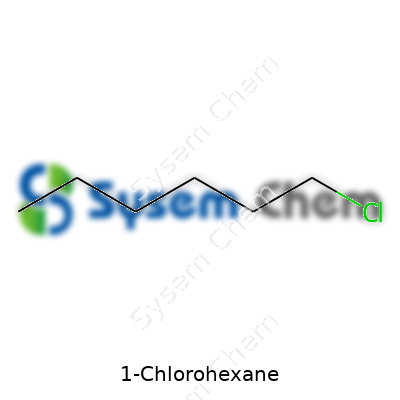
1-Chlorohexane is not an obscure chemical. Its formula is C6H13Cl. This chlorinated alkane shows up in labs, and you’ll see it flagged on chemical supplier lists. The name says a lot: one chlorine atom attached to the first carbon in a straight six-carbon chain. The structure is straightforward. Hexane, already a saturated hydrocarbon, swaps one hydrogen on the terminal carbon for a chlorine atom—that swap changes everything about how it reacts.
Drawing the Structure: What Does 1-Chlorohexane Look Like?
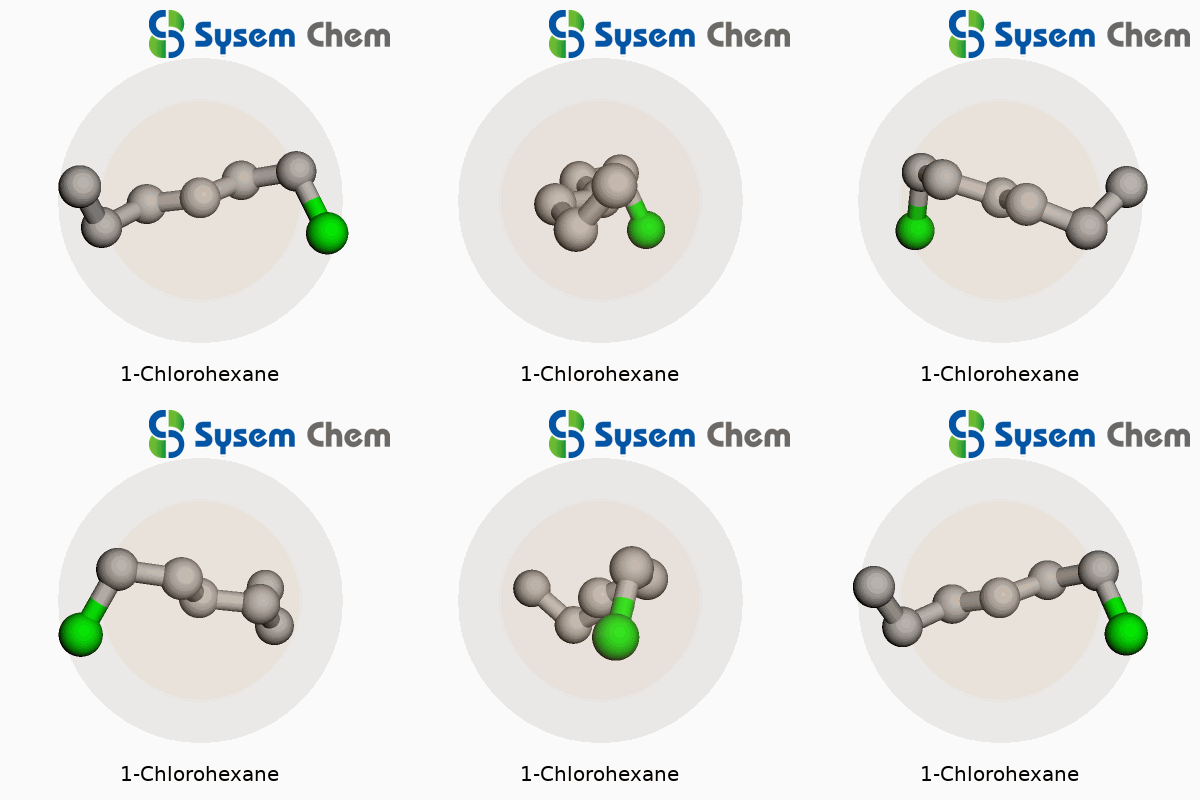
Imagine a six-link chain where each carbon is lined with hydrogens, except the first spot, covered by chlorine. If you sketch it, start with six carbons in a row. Attach hydrogen atoms to fill each carbon’s remaining bonds, except the end carbon, which bonds to the chlorine. Chemists usually write the formula as CH3(CH2)5Cl, emphasizing the straight chain and the chloride at the start.
The chlorine atom, larger and more electronegative than hydrogen, stands out. This gives 1-chlorohexane a polarity that regular hexane doesn’t show. That matters for how it dissolves, reacts, or even smells. Its boiling point rises over unmodified hexane—a sign that the forces holding each molecule together shifted just from that one atom.
Real-World Uses and Why Structure Shapes Behavior
Anyone who’s ever worked in a university lab or industrial facility will recall that 1-chlorohexane rarely gets star billing. It acts more like an extra in organic synthesis. Chlorinated hydrocarbons like this one offer a good grip for further chemical reactions. That carbon-chlorine bond makes the molecule reactive enough for it to pass its “chlorine hand” on to other compounds—the backbone in making alcohols, amines, or new chains for specialty chemicals.
Some labs use it as a solvent. It manages certain oils, waxes, or resins that won’t budge with water or mild organics. Its slightly polar nature helps bring stubborn substances into solution. It’s also a reference standard in gas chromatography, which taps its volatility and distinct molecular signature for calibrating separation columns.
Safety, Environmental Factors, and Responsible Handling
Handling 1-chlorohexane should never get casual. Like many chlorinated organics, it poses health risks. Skin can absorb it, and breathing vapors may irritate airways. Studies highlight potential nervous system effects after heavy or repeated exposure. I’ve seen older colleagues develop headaches or dizziness after handling chlorinated solvents without enough ventilation—lessons that remind you even “routine” chemicals warrant respect.
Waste management often gets overlooked. Chlorinated hydrocarbons don’t break down easily in soil or water. Some eventually form persistent organic pollutants, carrying real risks for aquatic life. Facilities must treat waste—usually through incineration or chemical neutralization—to prevent environmental buildup.
What Can Be Done Better?
Practical solutions start with engineering controls—use proper fume hoods and keep personal protective gear on. Substituting less hazardous solvents where possible reduces exposure risks. Training workers to spot hazards and apply controls matters far more than any warning label. Chemists and labs now lean on green chemistry, pushing for alternatives that handle the same jobs with less long-term impact.
Regulatory guidelines provide a floor, not a ceiling. Companies can set higher standards by tracking emissions and investing in safer technologies. Community right-to-know rules force transparency—people deserve to know what’s stored or used nearby. The chain reaction that starts from one atom’s change, like swapping hydrogen for chlorine, echoes through chemistry and public health alike.
Why Storage Matters
Anyone who’s worked in a lab or around chemicals understands storage isn’t just about finding a free shelf. With 1-chlorohexane, a colorless, flammable liquid, storage mistakes can create real dangers. Leaking bottles and poorly ventilated rooms invite health risks like headaches, dizziness, and even fires. I’ve seen first-hand the fallout when someone left volatile chemicals too close to a heat source: alarms blaring, people running, an avoidable hazard turning into a whole-day mess. Safe storage protects people every day and ensures research and industrial work continues smoothly.
Key Physical Characteristics
1-chlorohexane, or hexyl chloride, boils around 132°C and flashes at 29°C. If you’ve ever cracked open a bottle and caught the fumes, you know just how quickly it evaporates. It’s heavier than air, so vapors develop low to the ground, collecting in unexpected places. This property increases risk in rooms with little airflow. Its tendency to form explosive mixtures with air highlights the need for proper containment.
Safe Storage Steps
Routine best practice keeps chemicals far from heat, sparks, and any flame. I keep all flammable solvents in a dedicated metal safety cabinet, and 1-chlorohexane fits right in. These cabinets don’t just tick off compliance rules—they buy time in case of a fire, cutting off oxygen and containing spills. In shared spaces, labeling and inventory management goes a long way. Every bottle needs a label with the chemical’s name, hazard pictograms, and a date. This simple strategy stops coworkers from grabbing the wrong stuff or using expired stock.
Ventilation matters most in small workrooms. Once, I worked in a cramped university storeroom with only a cracked window for airflow. Over time, even small leaks built up a noticeable odor. Now, I always push for mechanical ventilation in any storage area dealing with volatile compounds. This one upgrade saves everyone’s health and gives peace of mind.
Container Choices and Housekeeping
Factory-sealed bottles do a good job of containing 1-chlorohexane. If repackaging is needed, containers made from glass or compatible plastics stay intact without degrading. Each cap or stopper must seal tightly. After a few weeks in a busy wet-lab, residues and spills collect around bottle necks and shelves, so weekly wipe-downs help keep things tidy. I’ve seen labs that ignored basic cleanup, becoming hazardous just from buildup.
Environmental Impact
Chemical spills and leaks don’t just stick to the lab. 1-chlorohexane can slide into drains and head out into the environment. Waste disposal protocols make a difference. I make sure waste goes into approved solvent containers. Local disposal companies handle the rest. In the past, I saw labs dump old solvents in regular trash cans, leading to leaks that threatened local water and air quality. Following clear waste procedures stops these issues at the source.
Simple Upgrades, Big Protection
Adding spill trays beneath bottles catches early leaks. Storing smaller quantities wherever possible limits risk. Quick checks of labels and containers each month save time and trouble down the road. For everyone working with 1-chlorohexane, these steps keep workplaces productive, people safe, and accidents off the daily agenda.
Understanding 1-Chlorohexane in Real Terms
1-Chlorohexane is not a word that rolls off the tongue. Yet, step into many chemistry labs or factories and you’ll find it there. Used as a chemical building block, this clear liquid packs a punch in more ways than one. Ask anyone who’s worked in industrial science—most treat it with real caution. It’s good to remember chemicals are not villains, but they deserve respect, especially once they escape into the wild.
How 1-Chlorohexane Travels in Nature
Stories about leaks and spills often stay local until rain washes trouble downstream or a breeze carries fumes to the next neighborhood. 1-Chlorohexane, like many solvents, does not break down right away. In water, it floats. That slick on top? It’s often a halogenated hydrocarbon like this one, ready to stick around. Walking along polluted creeks as a kid, the oily rainbows always signaled something unnatural—and possibly toxic—had moved into the stream.
What Science Says About Its Hazards
Researchers have tested how compounds like 1-Chlorohexane affect fish and small creatures that live in the mud. These tests show drops in growth rates and egg development. A 2018 review from the European Chemicals Agency lists the substance as acutely toxic for aquatic organisms. These aren’t just lab findings. Wildlife in real rivers pays for every leak or spill.
On land, vapors drift up and can irritate lungs. Workers who breathe it for hours complain about headaches—and at higher concentrations, it can knock you out. Birds and mammals near industrial zones tend to suffer from contaminated water or soil. Boiling points and vapor pressure are handy for chemistry, but for the guy next door, what matters is this: 1-Chlorohexane hangs around and doesn’t mix nicely with nature.
Real-World Experience: Managing Chemical Risks
Seeing barrels of organochlorines stored behind chain link never inspired confidence, especially after heavy rains. The stuff doesn’t vanish on its own. Local governments often scramble to clean up after accidents, but it’s a race against time and erosion. 1-Chlorohexane, thanks to its structure, resists breakdown by sunlight and bacteria. That means once it’s out, it lingers in groundwater, sometimes for years.
A sharp nose can sometimes pick up these chemicals—most folks outside industry never forget that sweet, sharp smell once it’s in the air. There’s a reason agencies like the EPA regulate emissions. These chemicals move easily through the environment but do not clear out fast.
How to Reduce the Harm
Better storage and tighter leak controls provide a basic buffer. It sounds obvious, yet inspections still reveal rusty tanks seeping into nearby soil. Companies that run routine checks and switch to safer containers spare both their staff and the neighborhood a lot of worry. Towns that set up catch basins and real-time water quality monitors tend to spot contamination early and act fast.
On a larger scale, recycling solvents—or swapping them for less stubborn molecules—shrinks the risk. Switching out for greener chemicals sometimes costs more upfront, but long term, the bill for cleaning up forests and rivers dwarfs that.
1-Chlorohexane stands as a reminder that every spill, every shortcut, sends rumbles far beyond factory gates. Being willing to invest in prevention pays off on balance sheets and in healthier communities. Watching what washes into our ditches and living next to safer plants gives everyone breathing room—literally and figuratively.